
Why Shoulder Rehab Stalls for Active Adults
Written by Dr. Tim Berreth, DPT
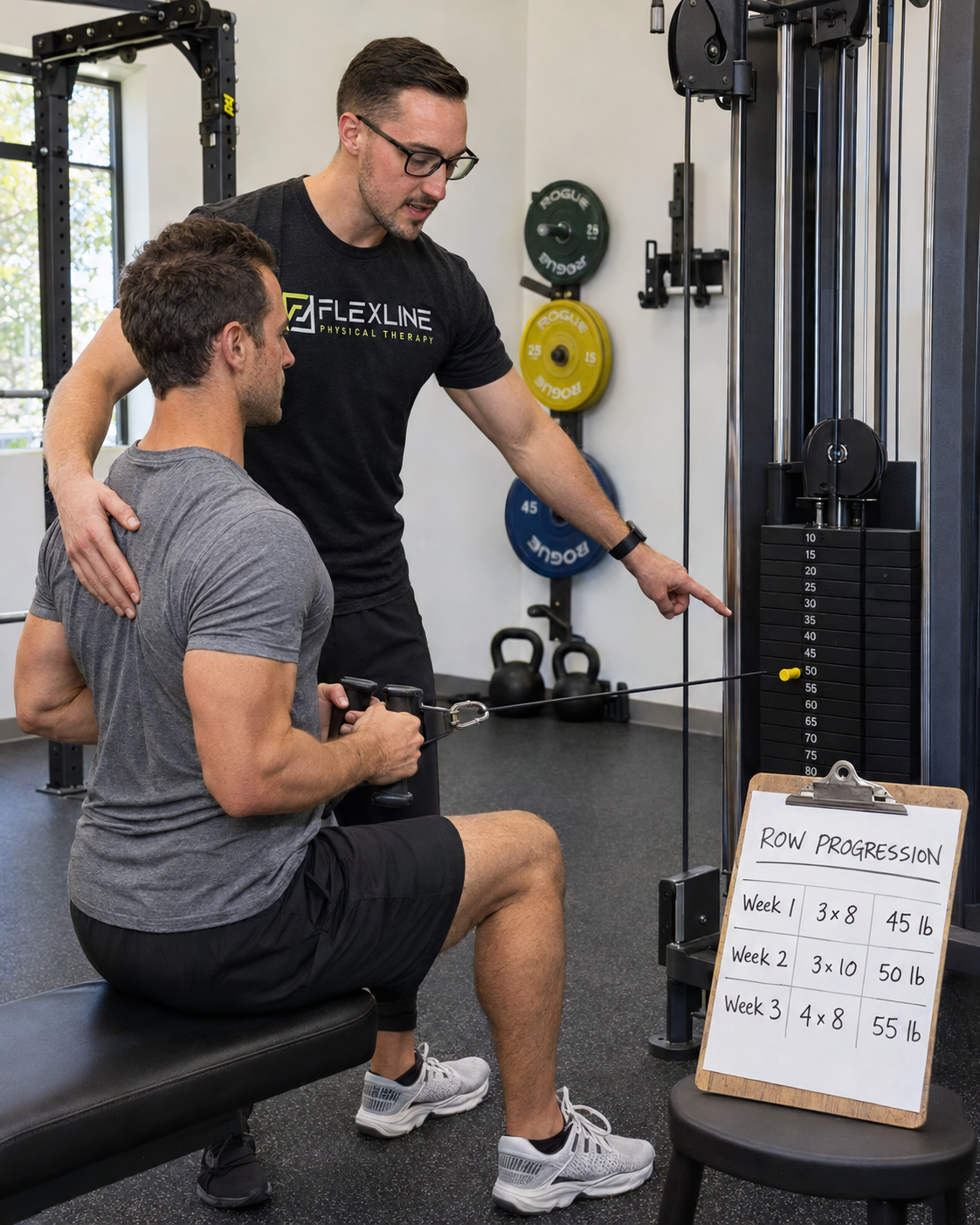
Shoulder rehab usually stalls for a few simple reasons. The exercises stopped getting harder, the plan never matched what you actually do in the gym or on the course, or something outside the shoulder was never addressed. A stall doesn't mean your shoulder can't heal. It usually means the plan needs to change.
What may be happening
Early in rehab, easy exercises work. They calm the shoulder down and get you moving again. The problem starts when those same exercises stay the same for weeks. Tendons and muscles adapt to the load you give them. If the load never goes up, there's nothing left to adapt to, and progress flattens out.
Active adults also have a second problem. Your sport or training puts far more demand on the shoulder than light band work does. If rehab never closes that gap, the shoulder feels fine in the clinic or living room and flares the first time you press, swing, or throw again.
Common reasons shoulder rehab stalls
The exercises never got harder.
Three sets of the same light band exercise for two months is maintenance, not rehab.
The plan doesn't look like your activity.
A shoulder that needs to press overhead, swing a club, or throw has to be trained for that demand before it can handle it.
Pain was the only thing guiding progress.
Waiting until everything feels perfect before adding load can keep you stuck. Mild, settling discomfort is often acceptable during loading, and your clinician should help you set that line.
A contributor outside the shoulder was missed.
Neck stiffness, a stiff upper back, and weak shoulder blade control all change how the shoulder loads.
The diagnosis was never confirmed.
Frozen shoulder, a rotator cuff problem, and AC joint pain don't respond to the same plan.
Inconsistent effort.
Doing the work for a week, then stopping for two, rarely builds the capacity you need.
Training stayed the same.
If you keep doing the exact lifts or throws that irritate the shoulder at full volume, rehab is fighting your program.
What can you safely try
Check whether your exercises have actually gotten harder in the last four weeks. If not, that's the first thing to change.
Add a little weight, a few reps, or a slower tempo to one exercise at a time, and see how the shoulder feels the next day.
Include work for the upper back and shoulder blade, not just the rotator cuff.
Modify the lifts or throws that flare you up instead of stopping all training.
Give any change two to three weeks before deciding if it worked.
SIGNS THIS SHOULD BE ASSESSED
Get the shoulder looked at if you've done rehab for six to eight weeks without clear improvement, if strength isn't coming back, if pain wakes you at night, or if the shoulder still limits sleep, reaching, or your training.
A reassessment can show what the first plan missed.
When imaging or referral may be appropriate
Imaging or an orthopedic referral makes more sense when pain and weakness haven't improved despite a plan that truly progressed, when there was a specific injury, or when the exam points to a structural problem like a larger rotator cuff tear.
FREQUENTLY ASKED QUESTIONS (FAQs)
-
Most people notice some change within a few weeks of a plan that fits them. Full recovery for tendon-related pain often takes months, and that varies by person and diagnosis.
-
Often, yes. The earlier plan may not have progressed enough or matched your activity. A fresh assessment looks at what was missing.
-
Usually not. Most people can keep training with the aggravating movements modified.
-
Not usually. Most stalls come from the plan, not the shoulder. Surgery becomes a conversation when a clear structural problem is confirmed and a well-progressed plan hasn't worked.
Still unsure what is driving your shoulder pain?
Request a shoulder evaluation with Flexline Physical Therapy in League City.
Related Reading
This page is for general education and isn't a substitute for individual medical advice. Seek urgent care for sudden severe pain with deformity, numbness or weakness spreading down the arm, signs of infection, or chest pain and shortness of breath alongside shoulder pain.