
VALD Force Plate Testing: How We Take the Guesswork Out of Return to Sport
Written by Dr. Tim Berreth, DPT
Most return-to-sport decisions in physical therapy come down to a clinician's opinion: does this look ready. At Flexline, we replace that guess with a number.
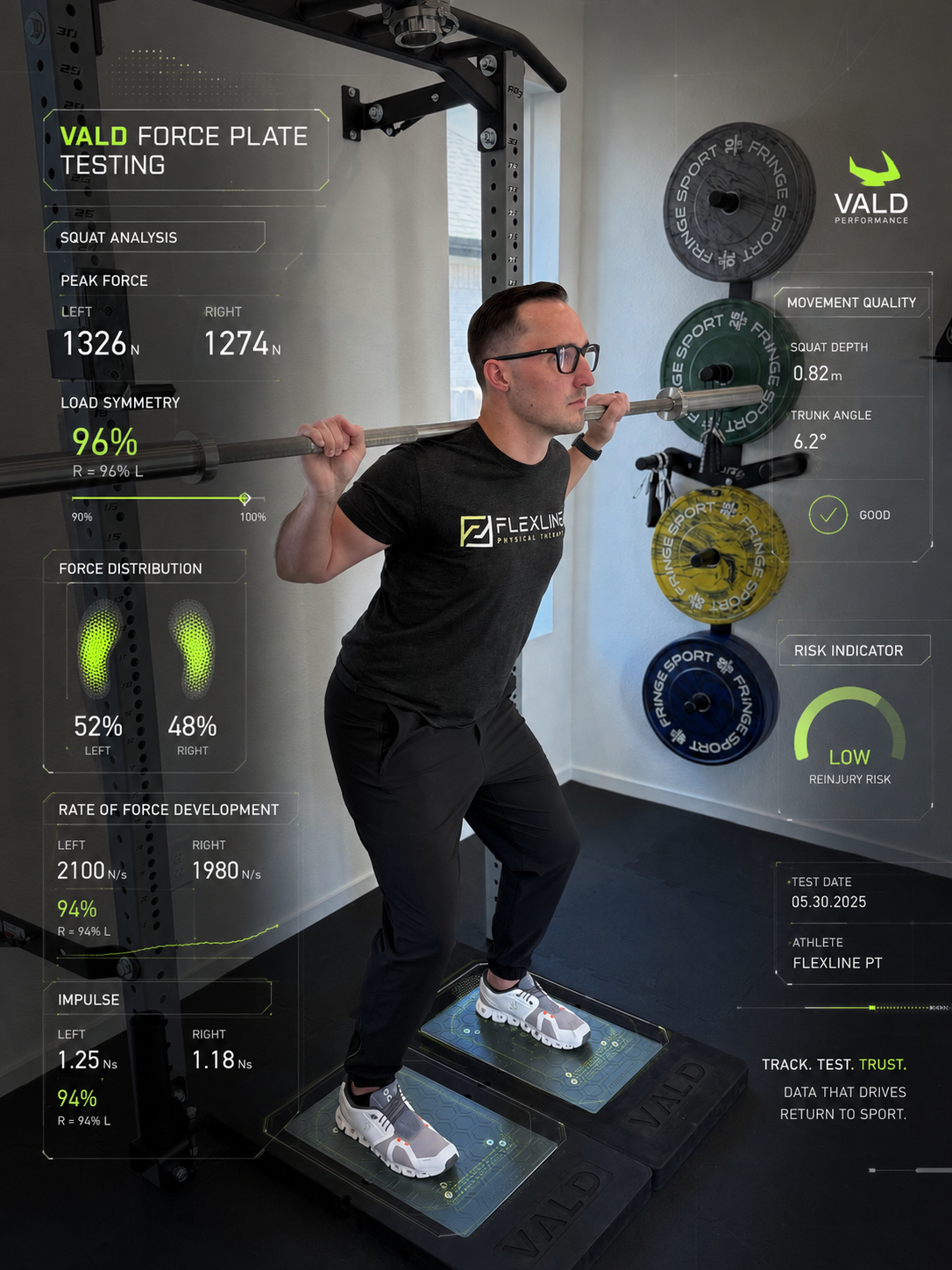
What VALD testing actually measures
VALD dynamometry and force plates measure force output, side-to-side symmetry, and movement quality during jumps, landings, and strength tests. Instead of asking whether a knee feels stable, we can show a single-leg hop test result and compare it directly to the uninjured side, or to a pre-injury baseline if we have one.
Why this matters more than how something looks
A knee can look stable in the clinic and still fail under load on the field or the court. Force plate data catches deficits that aren't visible to the eye: asymmetry in landing force, slower rate of force development on the involved side, compensation patterns that only show up under speed. These are the numbers that predict re-injury risk, not how a squat looks from across the room.
How we use it through a plan of care
Baseline testing at evaluation, so we know where someone actually starts
Re-testing at set intervals through the program, so progress is tracked in numbers, not impressions
Final testing before clearing return to sport, compared against established return-to-play thresholds
Who this is for
Anyone returning from an ACL reconstruction, a significant lower body injury, or anyone who wants an objective answer instead of a guess before going back to their sport, whether that's volleyball, football, soccer, disc golf, or weekend basketball.
Key takeaway: If your PT can't show you a number, they're guessing. We test instead.
Ready to See Where You Actually Stand?
If you want an objective answer instead of a guess before you get back to your sport, testing is the place to start.
Related Reading:
Returning to Sport After ACL Reconstruction
