
Shoulder Pain That Will Not Go Away:
What May Be Missing
Written by Dr. Tim Berreth, DPT
Shoulder pain that has stuck around for months usually means something in the plan so far was incomplete, not that the shoulder is permanently damaged or that pain is just something to live with.
The most common gaps are loading that never progressed past the easy stage, a contributing factor outside the shoulder itself that was never addressed, or a diagnosis that was never actually confirmed. Identifying which of those applies changes what happens next.
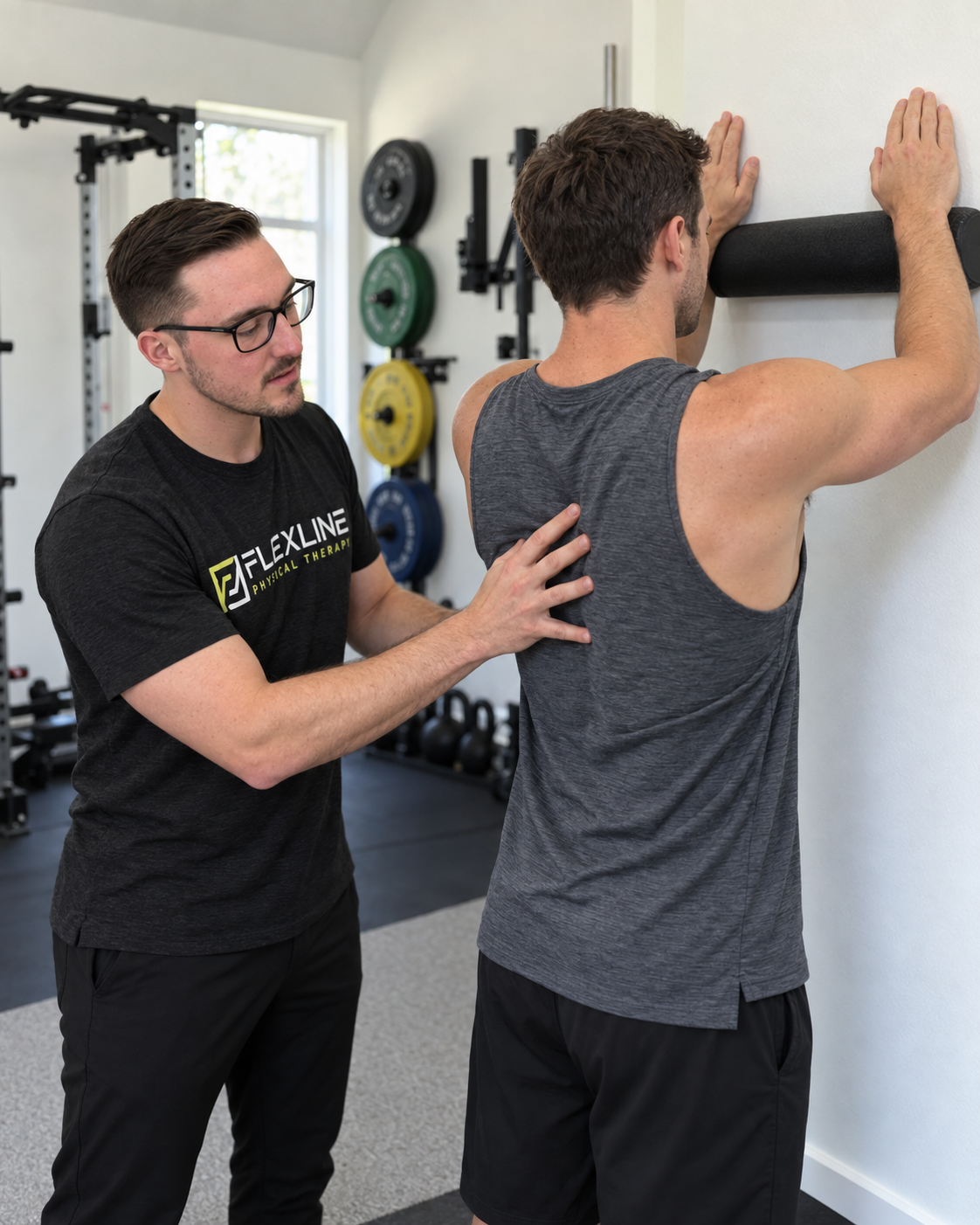
WHAT MAY BE HAPPENING
Pain that will not resolve after weeks or months of effort is rarely a sign that nothing will work. More often, one or more pieces of a complete plan were missing. Rest alone rarely resolves shoulder pain long-term, since tendons and joints generally need progressive loading to rebuild capacity rather than just time off.
A plan that stayed at the same easy exercises for months without increasing demand can plateau just as easily as no plan at all. Other times, the shoulder was never the primary driver, and stiffness or weak control in the neck, upper back, or shoulder blade was contributing to the symptoms the whole time.
COMMON CONTRIBUTORS
Loading that stalled. Early-stage exercises are appropriate at first, but a shoulder that never progresses to heavier or more demanding movement often stops improving because it was never asked to adapt further.
An incomplete or unconfirmed diagnosis. General exercises for "shoulder pain" treat a symptom, not a cause. A rotator cuff issue, frozen shoulder, and AC joint pain respond to different emphases, and a plan built around the wrong one can stall even when the effort is consistent.
A contributor outside the shoulder itself. Neck stiffness, thoracic spine mobility, and shoulder blade control all affect how the shoulder moves and loads. A plan that only addresses the joint itself can miss a driver sitting one segment away.
Inconsistent dosage. Sporadic effort, whether too little or with long gaps between sessions, rarely produces the same result as a structured, progressive plan followed consistently.
Guarding and avoidance. Ongoing pain can lead to protecting the shoulder more than necessary, which reduces normal movement and strength over time and can itself become part of what keeps symptoms going.
WHAT YOU CAN SAFELY TRY
Review whether the current plan has actually increased in difficulty over the past several weeks, or whether it has stayed at the same starting point.
Add work for the neck, upper back, and shoulder blade, not just the shoulder joint itself, since these regions commonly influence shoulder mechanics.
Keep a simple log of what movements provoke symptoms and how the shoulder responds over the following day, not just during the activity. Patterns in that log are useful information for a reassessment.
Stay generally active rather than avoiding the shoulder altogether, since prolonged avoidance can reduce strength and confidence in the joint beyond what the original problem caused.
Give a revised plan several weeks of consistent effort before judging whether it is working, since tissue and strength changes take time to show up.
Signs this should be assessed
Get the shoulder reassessed if pain has lasted more than six to eight weeks without meaningful change, if the current exercise plan has not progressed in difficulty during that time, if there is weakness that has not improved, or if daily activities like sleeping on that side or reaching overhead are still limited. Persistent pain without a clear pattern of improvement is a reason to look at the plan itself, not a reason to assume nothing will help.
When imaging or referral may be appropriate
Imaging or a referral becomes more appropriate when pain has persisted despite a genuinely progressive rehab plan, when there is a clear strength deficit that is not improving, or when a specific structural diagnosis (a labral tear, a significant rotator cuff tear, or advanced joint changes) has not yet been ruled in or out.
FREQUENTLY ASKED QUESTIONS
-
Not necessarily. Long-standing pain is more often explained by an incomplete plan, such as loading that never progressed or a contributor outside the shoulder that was missed, than by a serious structural problem. An assessment is what distinguishes between the two.
-
Often yes, particularly if the plan did not progress in difficulty over time or did not address the neck, upper back, or shoulder blade. A reassessment can identify what was missing the first time rather than repeating the same approach.
-
Rarely, on its own. Persistent shoulder pain generally responds better to a structured, progressively loaded plan than to continued rest, unless a specific red flag suggests otherwise.
-
Most people need several weeks of consistent, progressive work before seeing a clear trend. Judging a plan after only a few sessions typically is not enough time for tissue and strength changes to show up.
Still unsure what is driving your shoulder pain?
Request a shoulder evaluation with Flexline Physical Therapy in League City.
Related Reading
This page is for general education and isn't a substitute for individual medical advice. Seek urgent care for sudden severe pain with deformity, numbness or weakness spreading down the arm, signs of infection, or chest pain and shortness of breath alongside shoulder pain.