

Can You Keep Working Out With Shoulder Pain?
Written by Dr. Tim Berreth, DPT
In most cases, yes, you can keep training with shoulder pain, as long as the pain stays mild, does not worsen during the session, and settles back down within a day. That is a general guideline, not a guarantee for every situation, and pain that is sharp, worsening, or paired with weakness is a different signal that means it is time to modify or stop.
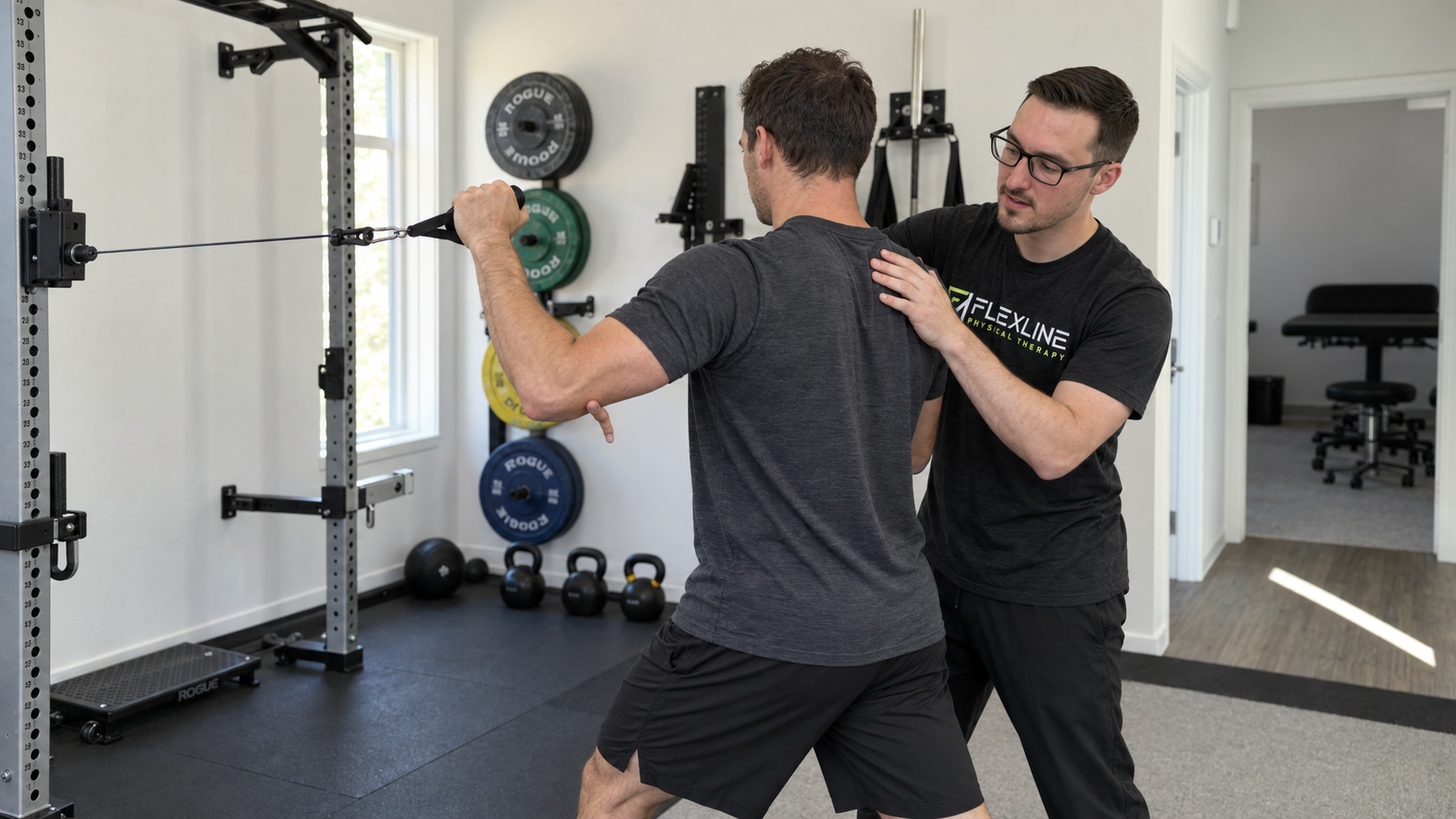
Why some pain is safe to train through
Muscles and tendons adapt to load, and a small amount of discomfort during exercise does not automatically mean damage is occurring. Rehab research on tendon and joint pain generally supports continuing to load a mildly irritable shoulder within a tolerable pain range, since some movement helps maintain strength and capacity better than complete rest does. The distinction is between pain that stays low, predictable, and short-lived, and pain that escalates or lingers, which signals the current load is more than the shoulder can currently handle.
A simple way to judge it
Mild and steady, fades within a day:
generally safe to continue with awareness, adjusting exercises that clearly aggravate it.
Moderate, increases during the set, or lingers more than a day:
reduce load, range, or volume on the aggravating movements rather than stopping training altogether.
Sharp, sudden, or paired with weakness or numbness:
stop the aggravating movement and get it assessed before continuing that pattern.
This is a general framework, not a substitute for an individual assessment, especially if pain has been present for more than a few weeks.
What you can safely try
Keep training the rest of the body and any pain-free shoulder movements rather than stopping all activity because one movement hurts.
Modify the aggravating exercise first: reduce range of motion, lower the load, or substitute a similar movement that does not reproduce the pain (for example, a neutral-grip press instead of a wide-grip bench, or a landmine press instead of a strict overhead press).
Add rotator cuff and shoulder blade strengthening on a consistent schedule, not just when the shoulder is already bothering you.
Track how the shoulder responds over the following 24 hours after a session, not just during it. That delayed response is often more informative than how it feels mid-set.
Give a modification two to three sessions before deciding whether it helped, rather than judging after one workout.