

Pickleball Shoulder Pain: Why It Happens and How to Keep Playing
Written by Dr. Tim Berreth, DPT
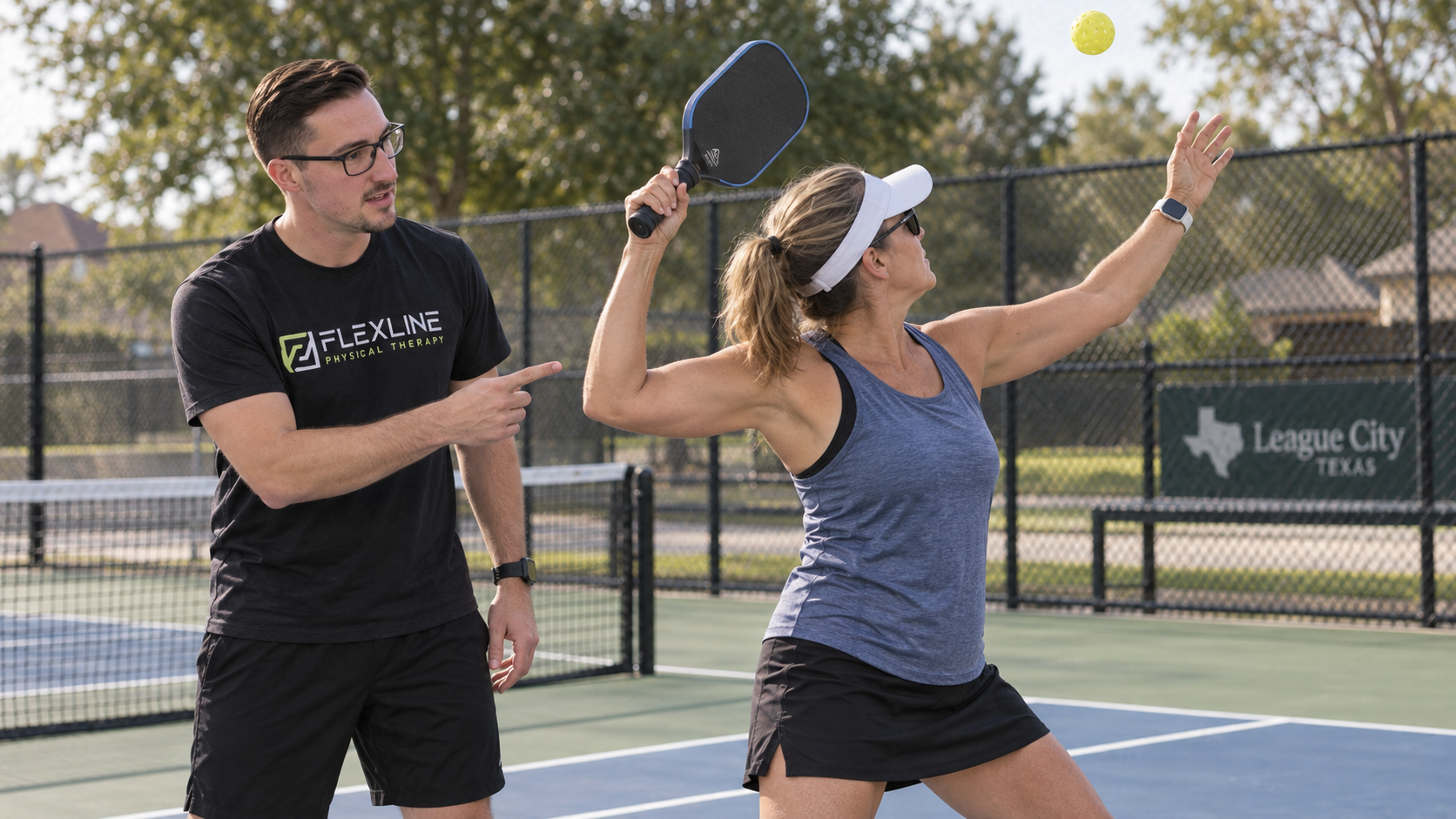
Pickleball shoulder pain usually shows up during the serve or an overhead smash, and it is most often related to the repetitive overhead and rotational demand of the sport outpacing what the shoulder can currently tolerate, not a single torn structure.
For most players, adjusting volume, serve mechanics, and building rotator cuff capacity resolves it or makes it manageable while that capacity is rebuilt. Pain that persists despite those changes, or that comes with weakness, is worth assessing directly.
Why pickleball tends to trigger shoulder pain
Pickleball asks the shoulder to repeatedly rotate, reach overhead, and decelerate the arm quickly on serves, smashes, and reflex volleys at the net. Unlike a sport with a long off-season or built-in rest between points, pickleball games are fast and continuous, so the shoulder gets less recovery time between repetitions than most players realize.
If the rotator cuff and shoulder blade muscles do not have enough endurance and control for that repeated overhead load, the front or top of the shoulder becomes the point that reacts.
Common contributors (not one cause)
Underlying tendinopathy or prior shoulder irritation.
A shoulder that was already managing some irritation from lifting, work, or another sport can become symptomatic once pickleball adds a new, repetitive overhead demand.
Sudden increase in play frequency.
Jumping from occasional games to daily play, or a weekend tournament after weeks of limited play, is a common trigger. The shoulder reacts to the jump in volume, not just the sport itself.
Reduced thoracic or shoulder mobility.
Less ability to rotate through the trunk shifts more of the overhead motion onto the shoulder itself.
Limited rotator cuff or shoulder blade endurance.
Pickleball rewards quick, repeated overhead reactions. A shoulder that has strength but not muscular endurance can fatigue mid-session, and pain often shows up in the second or third game rather than the first.
Serve and overhead smash mechanics.
A serve that relies heavily on the shoulder instead of trunk rotation and leg drive puts more repetitive stress directly on the joint.
What you can safely try
Reduce play frequency or game count for one to two weeks rather than stopping entirely, and see whether symptoms trend down.
Favor dinking and groundstrokes over serving and overhead smashes while the shoulder settles, since those movements are lower overhead demand.
Add rotator cuff and shoulder blade endurance work (band-based external rotation, scapular strengthening) two to three times a week, not just before matches.
Warm up the shoulder with rotation and overhead movement before playing rather than starting cold.
Space out consecutive playing days early on if pain shows up specifically after back-to-back sessions.
Signs this should be assessed
Get the shoulder evaluated if pain persists after a couple of weeks of modified play and added rotator cuff work, if there is pain outside of pickleball (reaching, sleeping, daily activity), if there is noticeable weakness on one side, or if pain is sharp and localized rather than a general ache that fades with warmup. Pain that shows up at the start of every session, rather than only after extended play, deserves earlier attention.
When imaging or referral may be appropriate
Most pickleball-related shoulder pain does not need imaging. It becomes appropriate when there is a clear strength deficit that does not respond to a structured loading and modification plan, a suspected labral or rotator cuff tear based on assessment findings, or a specific injury (a fall, a mistimed reach, a sudden sharp pain during a swing) rather than a gradual onset.
FREQUENTLY ASKED QUESTIONS
(FAQs)
-
Usually not right away. Reducing volume, favoring lower-overhead shots, and adding rotator cuff work is often more effective than stopping altogether, since some pain-free play helps maintain shoulder tolerance while things settle.
-
The mechanism is similar. Both involve repetitive overhead and rotational demand, and both tend to respond to the same combination of volume management and rotator cuff and shoulder blade strengthening.
-
It can be a contributor, particularly a serve that relies mostly on the arm and shoulder instead of trunk rotation. A closer look at mechanics is useful if pain is specific to serving.
-
A reasonable trial is one to two weeks of consistent modification. If pain is not trending down by then, or if it is affecting movement outside of pickleball, an assessment will identify what is actually driving it instead of guessing at more changes.
Still unsure what is driving your shoulder pain?
Request a shoulder evaluation with Flexline Physical Therapy in League City.
Related Reading
Can You Keep Working Out With Shoulder Pain?
Shoulder Pain Treatment for Active Adults in League City, TX
This page is for general education and isn't a substitute for individual medical advice. Seek urgent care for sudden severe pain with deformity, numbness or weakness spreading down the arm, signs of infection, or chest pain and shortness of breath alongside shoulder pain.