
Disc Golf Shoulder Pain: Why You Don't Have to Stop Playing to Get Better
Written by Dr. Tim Berreth, DPT
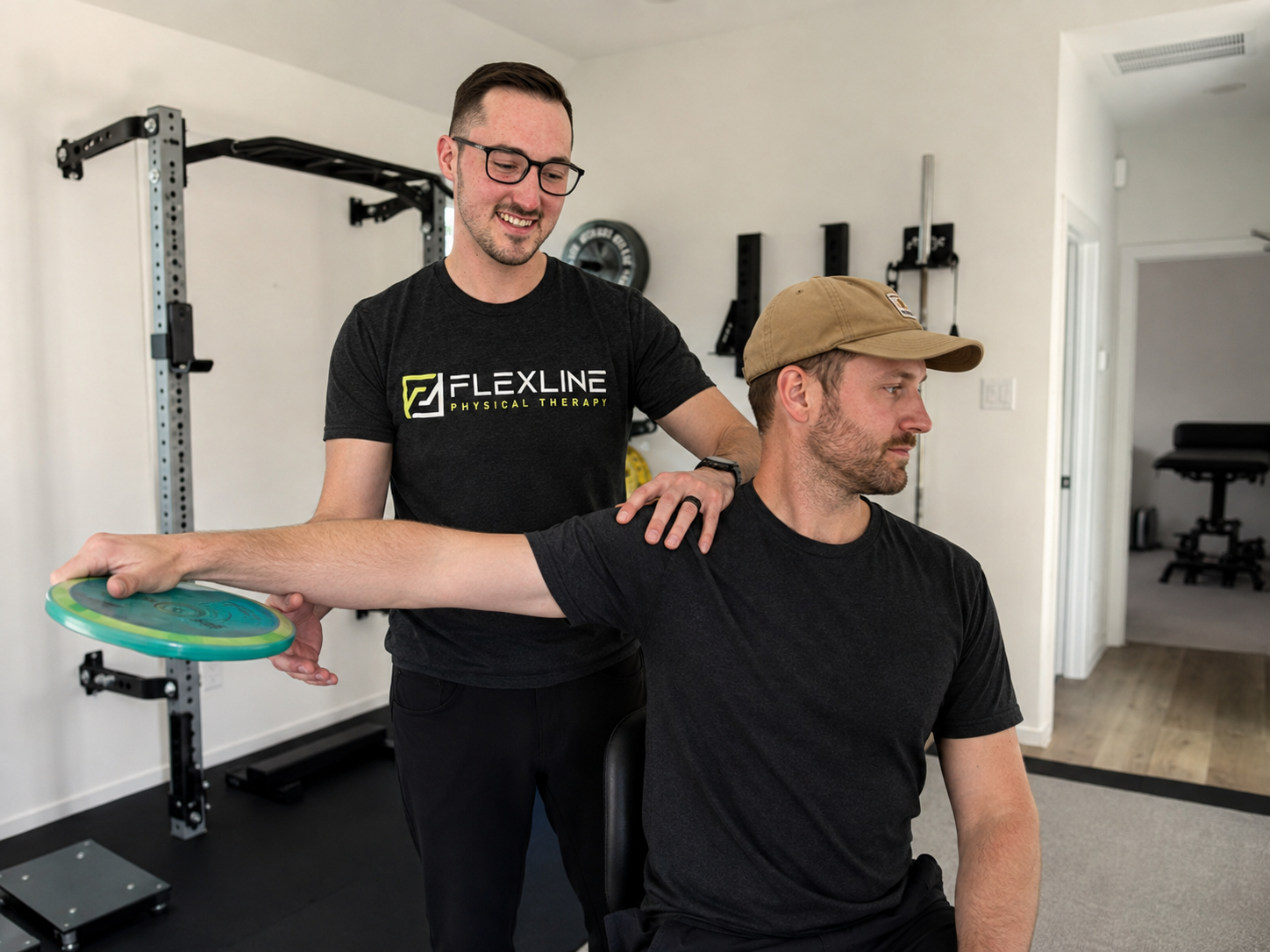
Disc golf shoulder pain usually shows up the same way: a dull ache that gets worse through a round, sharper pain on specific throws, and it doesn't fully go away with rest.
Why disc golf is hard on the shoulder
A full backhand or forehand drive puts the shoulder through a fast, repeated rotational load, similar to a baseball throw but happening dozens of times per round, multiple rounds a week for a lot of players. That repetition, combined with limited off-season and minimal cross-training for most recreational and competitive players, is what wears down shoulder tissue over time. It's rarely one bad throw. It's volume without enough recovery capacity built underneath it.
Why "just rest it" doesn't usually work
Rest reduces symptoms temporarily, but the shoulder goes right back to the same rotational demand the moment you pick the disc back up, with no more tissue capacity than before. That's why the same pain tends to come back a few rounds after returning from a break.
Our approach
Assess the actual movement fault, whether it's a mobility restriction, a scapular control issue, or a rotator cuff strength deficit, rather than treating "shoulder pain" as one generic diagnosis
Build capacity with progressive loading specific to throwing mechanics, not generic shoulder exercises
Modify throwing volume and form during treatment instead of stopping entirely, so you're still playing while you get better
What we don't do
We don't tell disc golfers to stop playing for six weeks and hope it's better afterward. That approach doesn't build the capacity needed to handle the sport again. It just delays the same pain.
Key takeaway: Disc golf shoulder pain is a capacity problem, not a reason to quit. Build the capacity and you can keep playing while you heal.
Still Throwing Through Shoulder Pain?
Rest alone hasn't fixed it because rest doesn't build capacity. Let's address the actual cause.
