
Dry Needling vs. Dry Needling with E-Stim: What's the Difference
Written by Dr. Tim Berreth, DPT
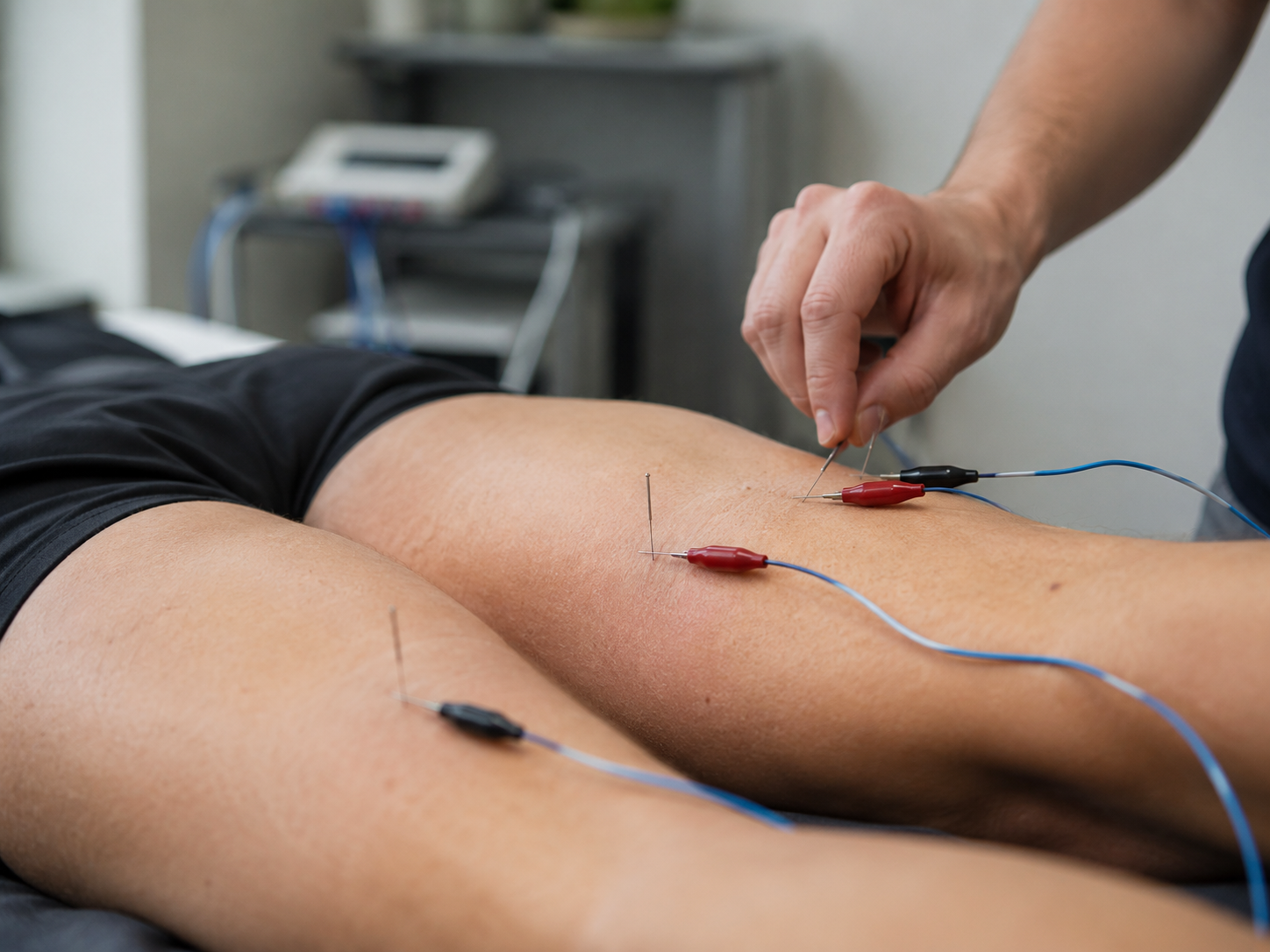
Both use the same thin filiform needles. The difference is what happens after the needle is in.
Standard dry needling
The needle is inserted directly into a trigger point or tight band of muscle to create a local twitch response, which helps release tension and reduce pain in that specific spot. It's precise, targeted, and works well for isolated muscle tightness or a single stubborn trigger point.
Dry needling with e-stim
Once the needles are placed, we run a light electrical current between them. That current keeps the muscle contracting rhythmically for the duration of treatment, which does two things standard needling alone doesn't: it drives a stronger local blood flow response, and it can help retrain muscle activation in areas that have gone quiet after an injury. That's a common issue after surgery or a long period of pain, where the nervous system stops firing a muscle normally even after the tissue has healed.
How we decide which to use
Isolated tight spot with no motor control issue: standard dry needling
Chronic pain area needing more circulation: e-stim added
Post-surgical or long-standing injury where a muscle isn't firing properly: e-stim, since the point is retraining activation, not just release
What it feels like
A brief pinch on insertion, then a dull ache or twitch response. With e-stim, you'll feel a rhythmic pulsing while the current runs. Most people tolerate both well, and soreness afterward is similar to a hard workout, gone within a day or two.
Key takeaway: Standard needling releases. E-stim needling releases and retrains. Which one you need depends on what's actually wrong, not preference.
Not Sure Which One You Need?
That's what the evaluation is for. We'll figure out what your tissue actually needs before we pick up a needle.
