
StemWave Shockwave Therapy: What It Treats and How It Works
Written by Dr. Tim Berreth, DPT
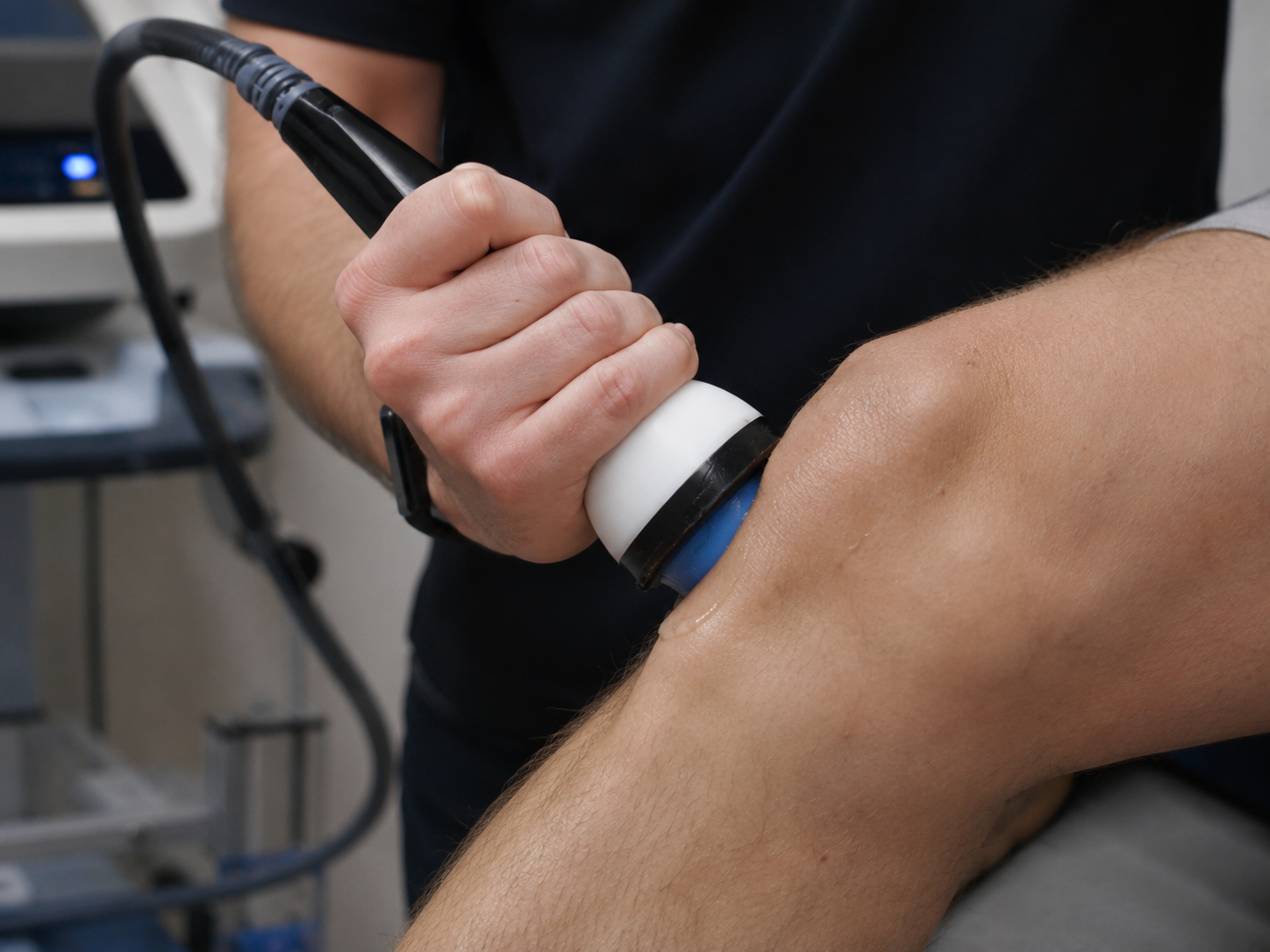
Shockwave therapy sounds more dramatic than it is. Here's what StemWave actually does and where it fits in a plan of care.
What StemWave is
StemWave delivers focused acoustic pressure waves into injured tissue. That mechanical stimulus activates mechanotransduction, triggering the body’s natural repair response through cellular signaling. Over time, this can promote new blood vessel formation, collagen remodeling, and tissue healing, making it particularly useful for chronic tendon and fascial conditions that have stalled and haven’t responded to rest, stretching, or other conservative treatments alone.
What it treats
Plantar fasciitis
Achilles tendinopathy
Tennis elbow and golfer's elbow
Patellar tendinopathy (jumper's knee)
Chronic, stubborn tendon and soft tissue pain that hasn't improved with typical treatment
What a session looks like
Treatment takes a few minutes, targeted directly at the affected tissue. Most protocols run once a week for several weeks. It's not a standalone fix. We pair it with the loading and strength work that actually rebuilds tissue capacity. StemWave accelerates the part of healing that would otherwise take longer on its own.
Why we added it
Tendon issues are some of the slowest-healing, most frustrating injuries to treat with exercise alone. StemWave shortens that timeline for the right cases. It's not for everyone and it's not a substitute for addressing the underlying loading problem that caused the injury, which is why it's always paired with, not instead of, one-on-one PT.
Key takeaway: If a tendon problem has been lingering for months and isn't responding to rest, StemWave might be the missing piece.
Ready to Find Out if StemWave Fits Your Case?
A lingering tendon problem doesn't need more rest. It needs the right tool paired with the right loading plan.
Related Reading
Dry Needling vs. Dry Needling with E-Stim
