
ACL Recovery: Why Feeling Ready Doesn't Mean Testing Ready
Written by Dr. Tim Berreth, DPT
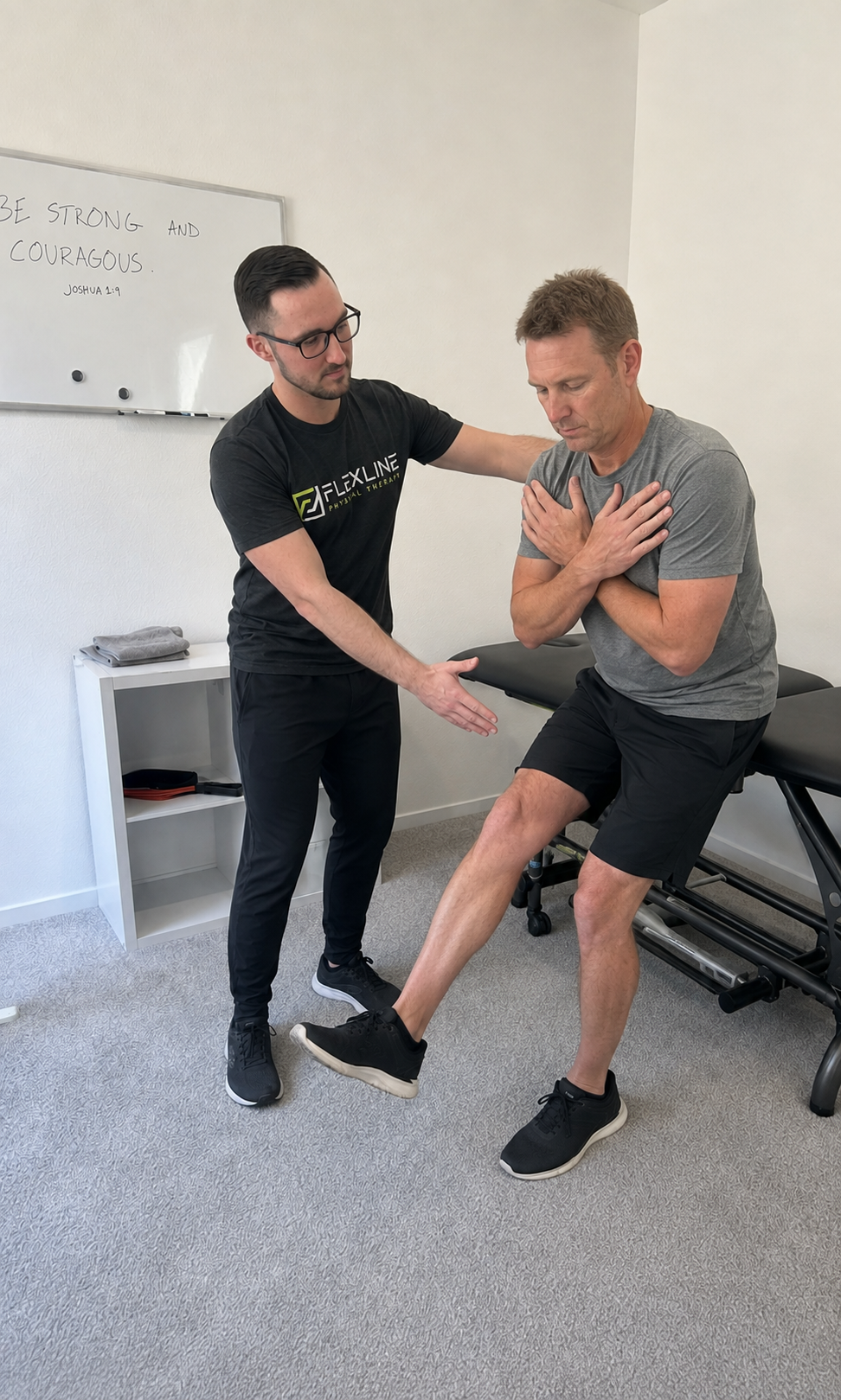
If you're a few months into ACL recovery and everything finally feels good again, walking is normal, jogging feels fine, squats aren't a fight anymore, it's tempting to treat that as the finish line. It isn't, and the reason why shows up clearly on a strength test, even when it doesn't show up in how you feel.
Why "Feeling Good" Isn't the Same as Being Ready
Feeling ready and testing ready measure two different things. How a knee feels day to day is shaped by pain, confidence, and how much load you've actually put through it recently. Strength symmetry, how the surgical leg compares to the uninjured one under real load, doesn't move just because the knee feels normal. The two can, and often do, disagree.
What We Actually Measure
We use VALD strength testing to compare the surgical leg to the uninjured leg directly, not a guess based on how a rep feels. That comparison is what catches a deficit that isn't obvious yet, because compensation patterns hide a lot. A patient can move a lot of weight on the surgical side and still be carrying most of the actual work on the uninjured leg without realizing it.
A Composite Case: Five Months Out, Feeling Strong
This is a composite case built from patients we've treated through a similar recovery, details have been changed and combined to protect privacy. A young athlete, a lineman, was about five months out from ACL surgery. He was walking normally, jogging a little, and squatting was starting to feel easy again. On the leg press, he was strong on both sides, pushing well past bodyweight for reps, even single leg.
When we tested quad strength symmetry directly, the surgical leg came back at the 40th percentile compared to his own uninjured side, which tested at the 99th. Not weak. Not obviously behind, in the gym or in conversation. But well short of where the healthy leg already was, and that gap is exactly the kind research ties to a higher risk of re-injury when athletes return before it closes.
Why This Gets Tracked, Not Guessed
None of this is about telling an athlete they're behind. It's about showing them, with a number instead of a feeling, where they actually stand and what's left to close before returning to full sport makes sense. That's the difference between a plan built on how something feels this week and one built on where the data says a patient actually is.
Key takeaway: Feeling ready is a real signal, but it isn't the same signal as testing ready. Strength symmetry testing catches the gap that confidence alone can't see.
Wondering Where You Actually Stand in Your ACL Recovery?
If you're feeling good but haven't tested strength symmetry side to side, that's the piece most return-to-sport decisions are missing.
