
What Causes Shoulder Clicking and When Does It Matter?
Written by Dr. Tim Berreth, DPT
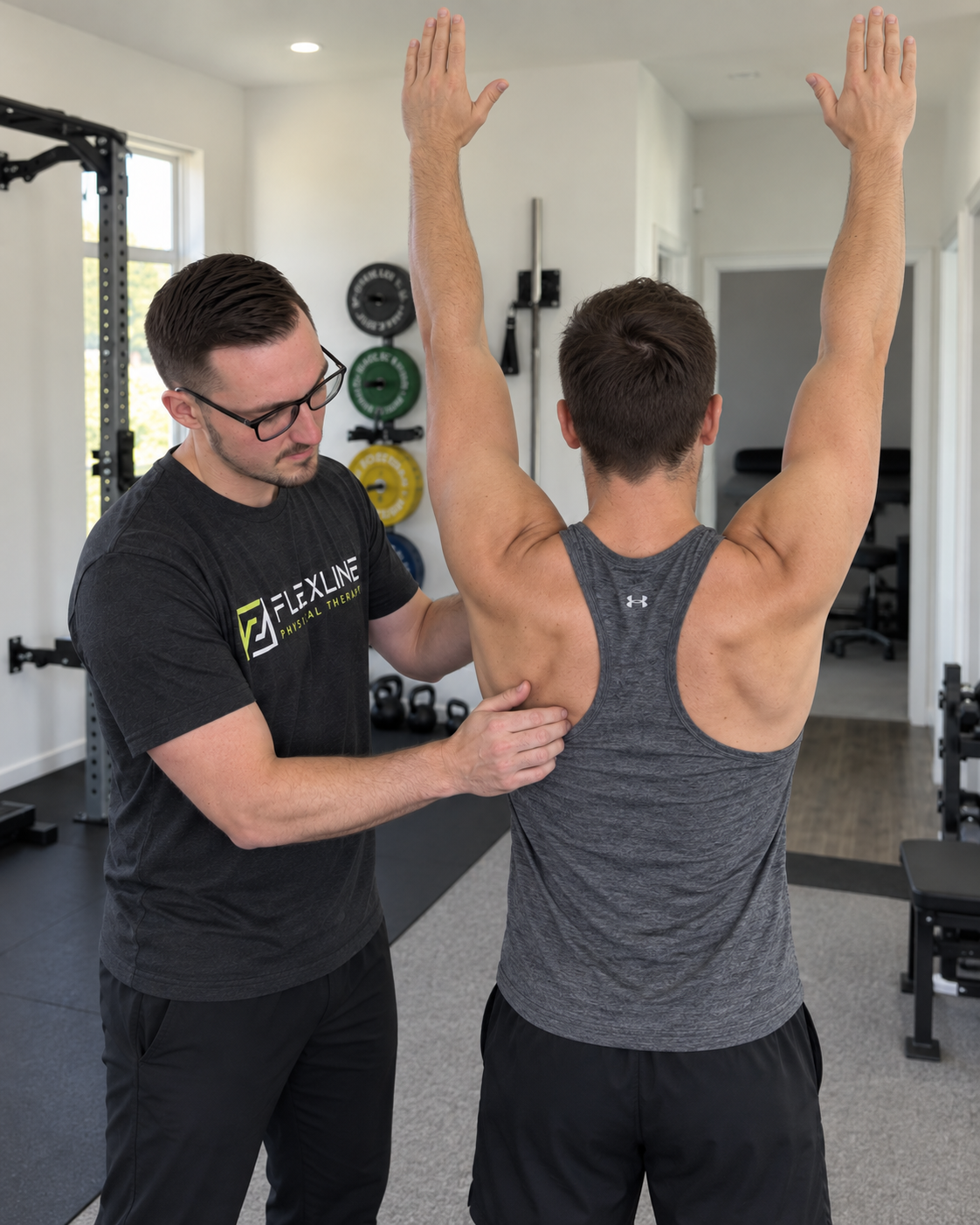
Shoulder clicking, popping, or catching is common and on its own is usually not a sign of damage. Tendons gliding over bone, small gas bubbles releasing inside the joint, and minor variations in how the shoulder blade tracks can all produce sound with no injury behind it. (Baldawi et al., 2022) It becomes worth assessing when the click comes with pain, a catching or locking sensation, a feeling that the shoulder is giving way, or when it started suddenly after a specific injury.
Why Shoulders Click
The shoulder is the most mobile joint in the body, and that mobility comes from a shallow socket held together mostly by soft tissue rather than bone. With that much motion available, small amounts of friction, fluid movement, or tendon-on-bone contact are common and usually harmless. A click that happens the same way every time, without pain, and without the shoulder feeling unstable is rarely something to fix.
Common contributors when clicking does matter
A click alone does not identify one specific structure or diagnosis. Several things can produce a painful or concerning click, and they are not interchangeable:
LABRAL IRRITATION
The cartilage rim around the socket can catch during certain movements, especially overhead reaching or rotation.
SHOULDER BLADE (SCAPULAR) MECHANICS
If the shoulder blade is not moving in a coordinated pattern with the arm, the joint surfaces can meet at slightly the wrong angle and produce grinding or clicking under load.
ROTATOR CUFF OR
BICEPSTENDON INVOLVEMENT
A tendon moving across an irritated or thickened area can produce a distinct pop, often with a dull ache afterward.
INSTABILITY
A shoulder that moves more than it should in the socket can catch or clunk, particularly with the arm overhead or behind the body.
WHAT YOU CAN SAFELY TRY
Pay attention to whether the click happens with pain or without it. Painless clicking during normal daily movement is a different situation than a click that reproduces sharp pain.
Avoid repeating the specific motion that triggers a painful click just to test it. Repeated provocation can aggravate irritated tissue.
Keep the shoulder moving through a comfortable range rather than avoiding it altogether. Complete rest does not resolve a mechanical or tracking issue.
Note when the clicking started and whether it followed a specific activity, lift, or injury. That detail is useful information for an assessment.
Get the shoulder evaluated if clicking is paired with pain, a catching or locking feeling that interrupts the movement, a sense that the shoulder is loose or giving way, or noticeable weakness compared to the other side. Clicking that started after a fall, a sudden pull, or a heavy lift is also worth assessing even if it does not hurt much yet.
SIGNS THIS SHOULD BE ASSESED
Most clicking does not require imaging. It becomes appropriate when there is suspected labral involvement that is not responding to a structured rehab trial, a clear instability pattern with repeated episodes of the shoulder giving way, or when a specific traumatic injury raises concern for a structural tear. An orthopedic referral is also appropriate if instability episodes are frequent enough to limit activity.
When imaging or referral may be appropriate
FREQUENTLY ASKED QUESTIONS
-
No. Painless clicking during normal movement is common and does not by itself indicate tissue damage. Pain, catching, or a feeling of instability alongside the click is what raises concern.
-
It depends on the cause. Clicking related to scapular mechanics often improves with the right strengthening and control work. Clicking related to an irritated tendon or labrum can worsen with the wrong exercise selection, which is why an assessment matters before building a plan.
-
Not automatically. If the click is painless and the shoulder feels stable and strong, most people can continue training with attention to form. If the click comes with pain or a catching sensation, that is a reason to get assessed before continuing to load it.
-
Sometimes. Clicking related to scapular tracking or muscle imbalance often quiets down once the underlying pattern is addressed. Clicking from joint or cartilage changes may persist even after pain resolves, and that is not automatically a problem if it stays painless.
Still unsure what is driving your shoulder pain?
Request a shoulder evaluation with Flexline Physical Therapy in League City.
Related reading
This page is for general education and isn't a substitute for individual medical advice. Seek urgent care for sudden severe pain with deformity, numbness or weakness spreading down the arm, signs of infection, or chest pain and shortness of breath alongside shoulder pain.