Shoulder Pain After Lifting Weights: What to Modify and What to Check
Written by Dr. Tim Berreth, DPT
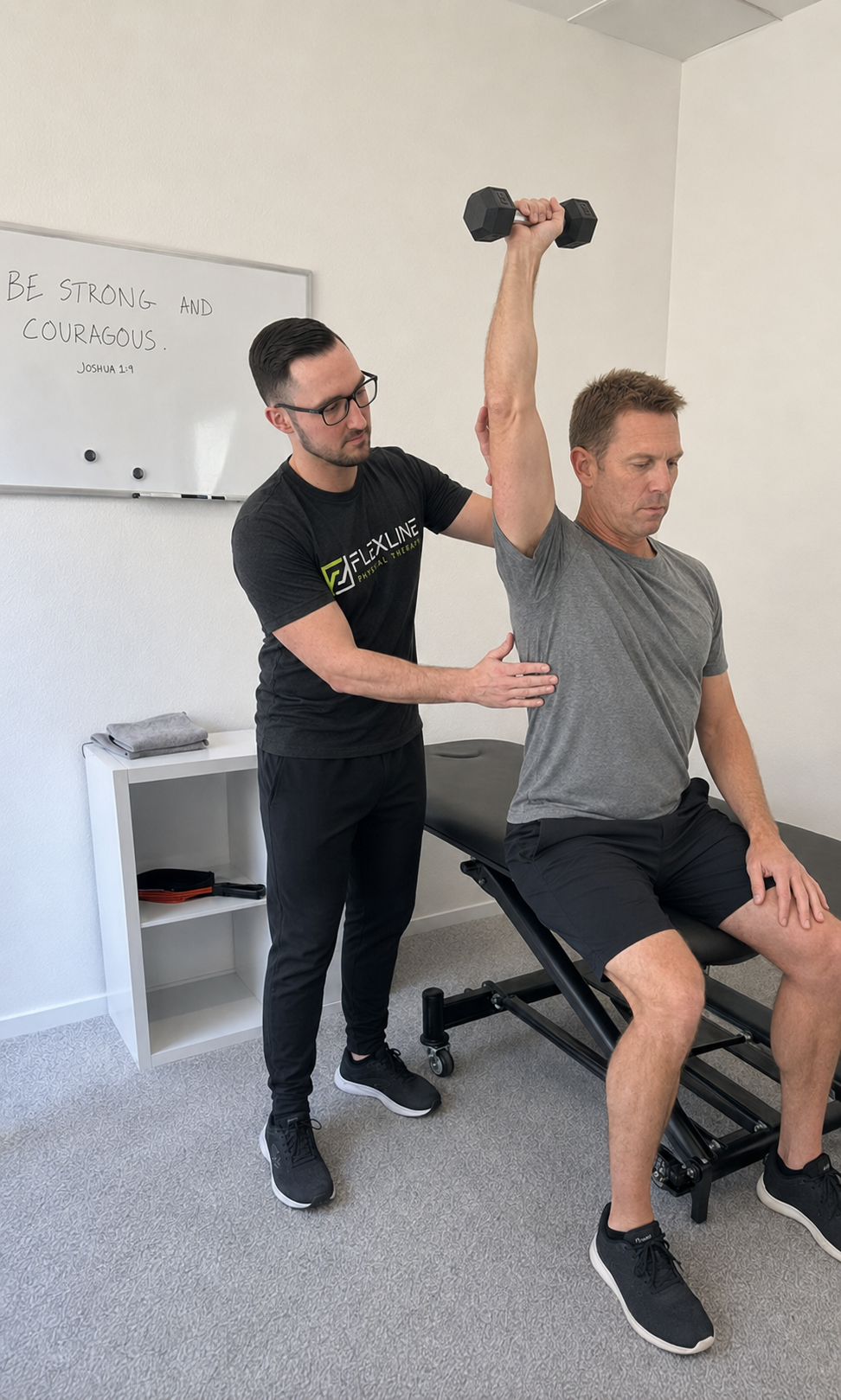
Shoulder pain that shows up during or after lifting, whether it's pressing, benching, or overhead work, usually means a specific movement or load is exceeding what your shoulder tissue can currently tolerate. That doesn't mean you have to stop lifting. It means the program needs to change until capacity catches up.
Why lifting triggers shoulder pain
Shoulder tissue adapts to load over time, but only within a certain rate. When volume, load, or a specific movement pattern increases faster than the tissue can adapt, or when technique repeatedly puts the shoulder in a vulnerable position, the tendon or joint structures involved get irritated. The pain is a signal that current demand has outpaced current capacity, not necessarily a sign of structural damage.
Common contributors
A jump in training volume or load without enough time for tissue to adapt
Technique that loads the shoulder in a vulnerable position, flared elbows on bench press or a poor bar path on overhead press
Inadequate recovery between high-volume upper body sessions
Pre-existing shoulder irritation carried into a new training block
Rotator cuff or scapular strength that hasn't kept pace with pressing strength

What you can safely try
Reduce range, load, or frequency on the specific lift that hurts rather than cutting all upper body work
Check bar path and elbow position on pressing movements
Add rotator cuff and scapular strength work if it's been missing from the program
Track which specific movement, angle, or load reliably reproduces the pain. That detail matters for figuring out what's actually going on

If modifying load and technique for two to three weeks hasn't reduced symptoms, or the pain is present outside of training, arrives suddenly, or comes with weakness, it needs an evaluation rather than continued self-adjustment.
Signs this should be assessed
When imaging or a referral may be appropriate
Most training-related shoulder pain doesn't require imaging before starting treatment. [cite: current CPG guidance on imaging thresholds for shoulder pain in resistance training populations, e.g. the 2025 JOSPT rotator cuff-related shoulder pain CPG] It becomes relevant after a specific traumatic event, when strength testing shows a significant deficit, or when a structured plan hasn't produced expected progress.
Frequently Asked Questions
-
Usually not entirely. Modifying the specific movement that's aggravating it, while keeping the rest of your training going, is typically more effective than stopping.
-
Often both play a role. An assessment can tell you whether the priority is a technique fix, a strength gap, or a mobility limitation.
-
Bench press loads the front of the shoulder in a fixed position under high load, which tends to expose weaknesses that don't show up as clearly on other movements.
-
It depends on which movement and angle reproduce the pain. A general rule is to reduce enough that you can complete the set without sharp pain, not just discomfort.