
Shoulder Impingement Exercises:
What Usually Helps and What to Avoid
Written by Dr. Tim Berreth, DPT
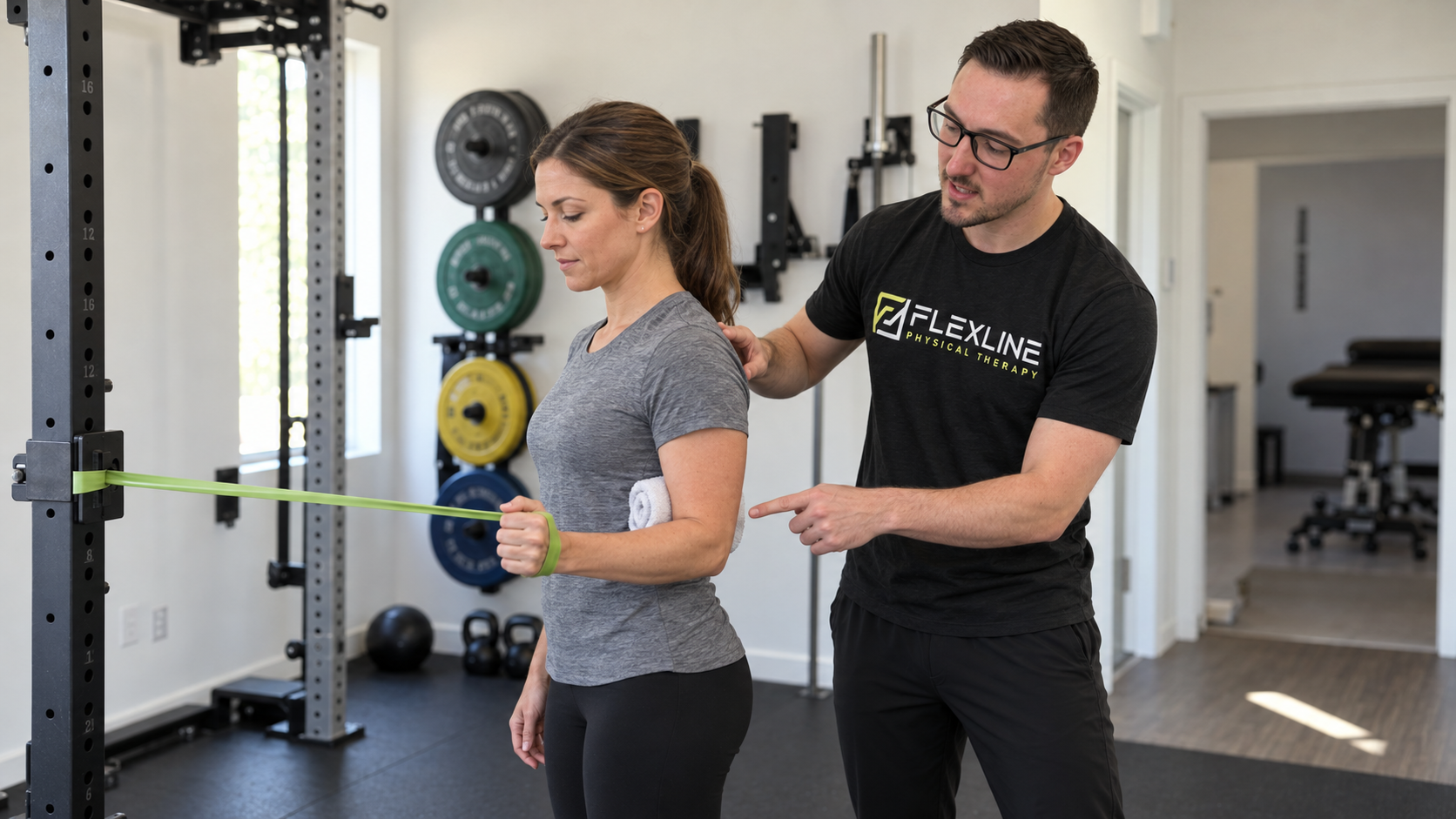
If overhead reaching, lifting, or sleeping on that side brings on a pinching or catching pain near the top or front of the shoulder, exercise is usually part of the answer, but not every exercise helps and some make it worse. The exercises that tend to help build strength and control in the muscles that keep the shoulder blade and the ball of the joint working together. The ones that tend to aggravate it load the shoulder in a compressed, high, or fully overhead position before that control is there yet.
WHAT MAY BE HAPPENING
"Impingement" describes a pattern, not one single structure being pinched. The space under the front of the shoulder blade narrows during certain arm positions, and if the rotator cuff and scapular muscles aren't controlling the shoulder blade and the head of the arm bone well, the tendons and bursa in that space can get irritated with repeated compression. That's why the same motion, like reaching overhead or reaching behind the back, tends to reproduce the pain reliably. The goal of exercise here isn't to stretch the space open. It's to improve how the shoulder blade and rotator cuff share the load so that space stays clear during the movements that matter to you.
EXERCISES THAT USUALLY HELP
Scapular setting and control drills
(scapular retraction, rows without excessive shrugging). These train the muscles that position the shoulder blade correctly before you add load.
Lower trapezius and serratus anterior strengthening
(prone Y raises, wall slides, push-up plus variations). These muscles are commonly underactive in this pattern and help control the shoulder blade during overhead motion.
Rotator cuff strengthening below shoulder height
(side-lying external rotation, resisted external and internal rotation with the elbow at the side). Working below the painful range first lets the cuff get stronger without provoking symptoms.
Gradual, pain-guided range of motion work
moving into higher ranges only as strength and control improve, not by pushing through a stretch.
Progressive reintroduction of the aggravating movement
once the exercises above are tolerated well, done at a lower load or partial range first.
EXERCISES THAT TEND TO MAKE IT WORSE
Upright rows and behind-the-neck presses.
Both drive the arm bone up into the narrow space at a mechanical disadvantage.
Heavy overhead pressing before scapular control is established.
Loading a position the shoulder can't yet control repeats the exact compression that caused the irritation.
Aggressive stretching into the painful range.
(forcing the arm overhead or behind the back). Stretching a tendon that's already irritated tends to aggravate it rather than help it.
High-rep push-ups or bench pressing with flared elbows.
which increases anterior shoulder loading in a position many people already feel it.
Any exercise that reproduces a sharp, catching pain.
even at low weight. A dull ache with fatigue is a different signal than a sharp catch, and the second one usually means backing off that specific movement for now.